
Solar Hub and LiFePO4 Battery Compatibility: Six Checks Before Ordering
Voltage is only one part of a complete storage interface review
Published · VIEWPOWER. Check product figures against current documents for the exact model.
Short answer: Check the hub and battery as one system. Nominal voltage alone cannot establish that a LiFePO4 battery may be charged, discharged or monitored safely through a particular solar hub.
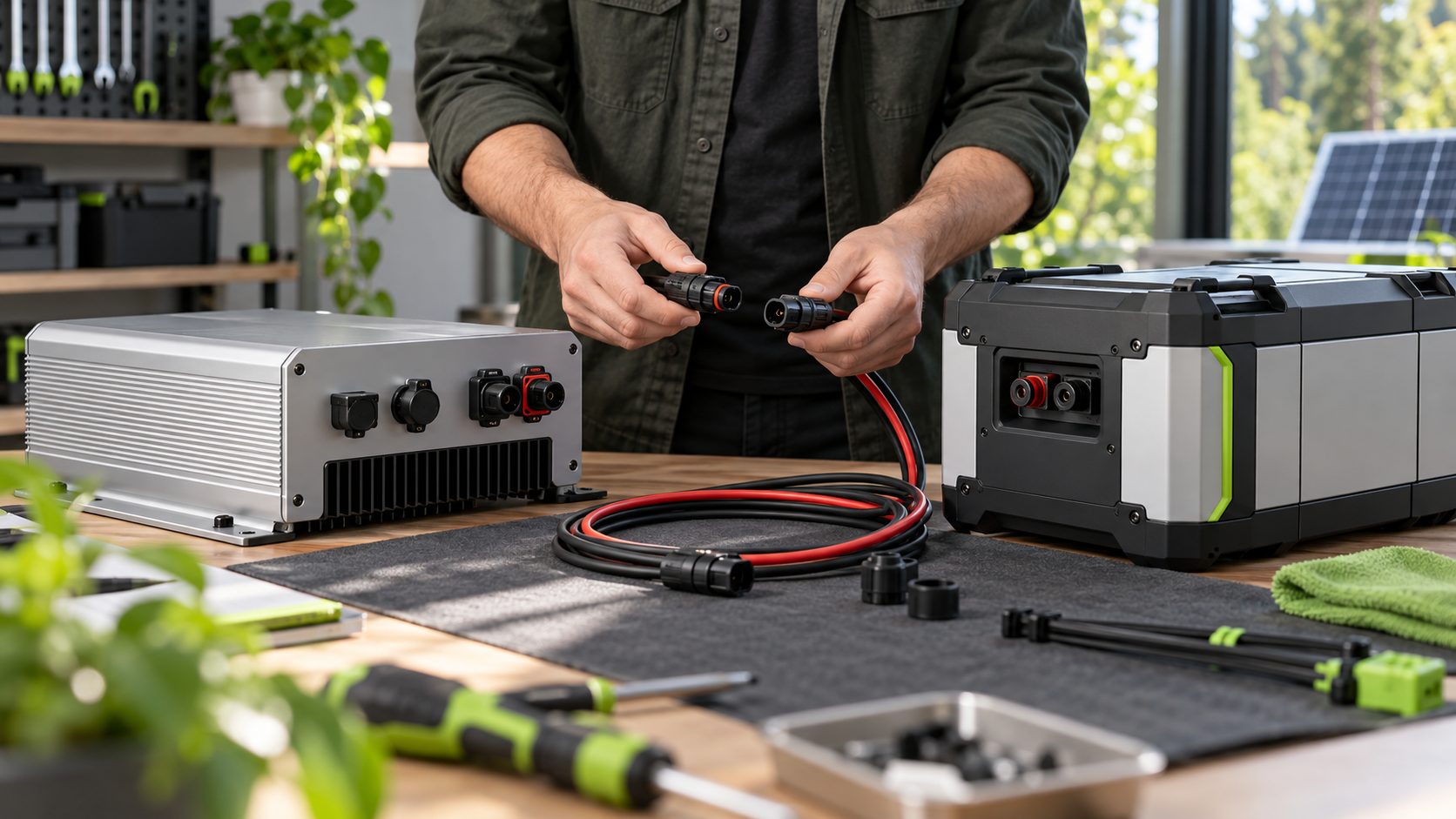
The six checks
- Operating voltage: Compare the battery's full operating range with the hub's battery interface, not just nominal voltage.
- Charge and discharge limits: Check permitted current, power and temperature-dependent limits for both devices.
- BMS communication: Confirm whether a required protocol, cable or approved battery list applies.
- Connectors and polarity: Verify pinout, cable gauge, connector rating and any approved adapter.
- Protection: Review fusing, isolation, fault response and enclosure suitability for the intended location.
- Expansion: Confirm permitted module count, stacking rules and firmware or control requirements.
Use model pages as a starting point
VIEWPOWER publishes reference information for the LS-H1600 solar hub and LS-L1024 storage battery. The pages describe their separate product characteristics. They do not, by themselves, certify a particular interconnection or operating configuration. Ask for the current interface and compatibility documents for the exact revisions.
Questions buyers ask
If both products mention 51.2V, are they compatible?
Not necessarily. Voltage range, charging limits, BMS communication and protection behavior still have to match.
Can a matching plug replace a compatibility check?
No. A connector's shape does not define its electrical rating, polarity or control protocol.
Information to provide
Share both model revisions, battery configuration, proposed PV input, load profile, installation environment and destination market. See the compatibility checklist and send a technical enquiry for a specific review.
Apply this to your project
Share the application, proposed components and target market so the relevant model documents and compatibility points can be reviewed.
Discuss your project ↗