
RV Power Planning: Calculate Loads Before Choosing a Portable Power Station
A simple energy worksheet for mobile and campsite applications
Published · VIEWPOWER. Check product figures against current documents for the exact model.
Short answer: List each RV load, multiply its power by expected daily operating hours, and then check startup peaks and required output ports. Compare that demand with usable stored energy and realistic charging opportunities before choosing a portable power station.
Build a daily energy worksheet
For each device, record rated power in watts and hours of use per day. A 40W load used for 5 hours represents 200Wh of energy before conversion losses or reserve. Sum the loads, then separately note appliances with short startup surges. This is an illustrative calculation, not a performance estimate for a particular product.
Separate capacity, power and interfaces
Battery capacity is an energy figure, usually expressed in Wh. Output rating describes how much power the station can deliver at a moment. A large Wh figure does not guarantee that a particular high-power appliance, plug type or voltage is supported. Check AC, DC and USB outputs, continuous and surge ratings, operating temperature and the intended charging method.
Plan the recharge path
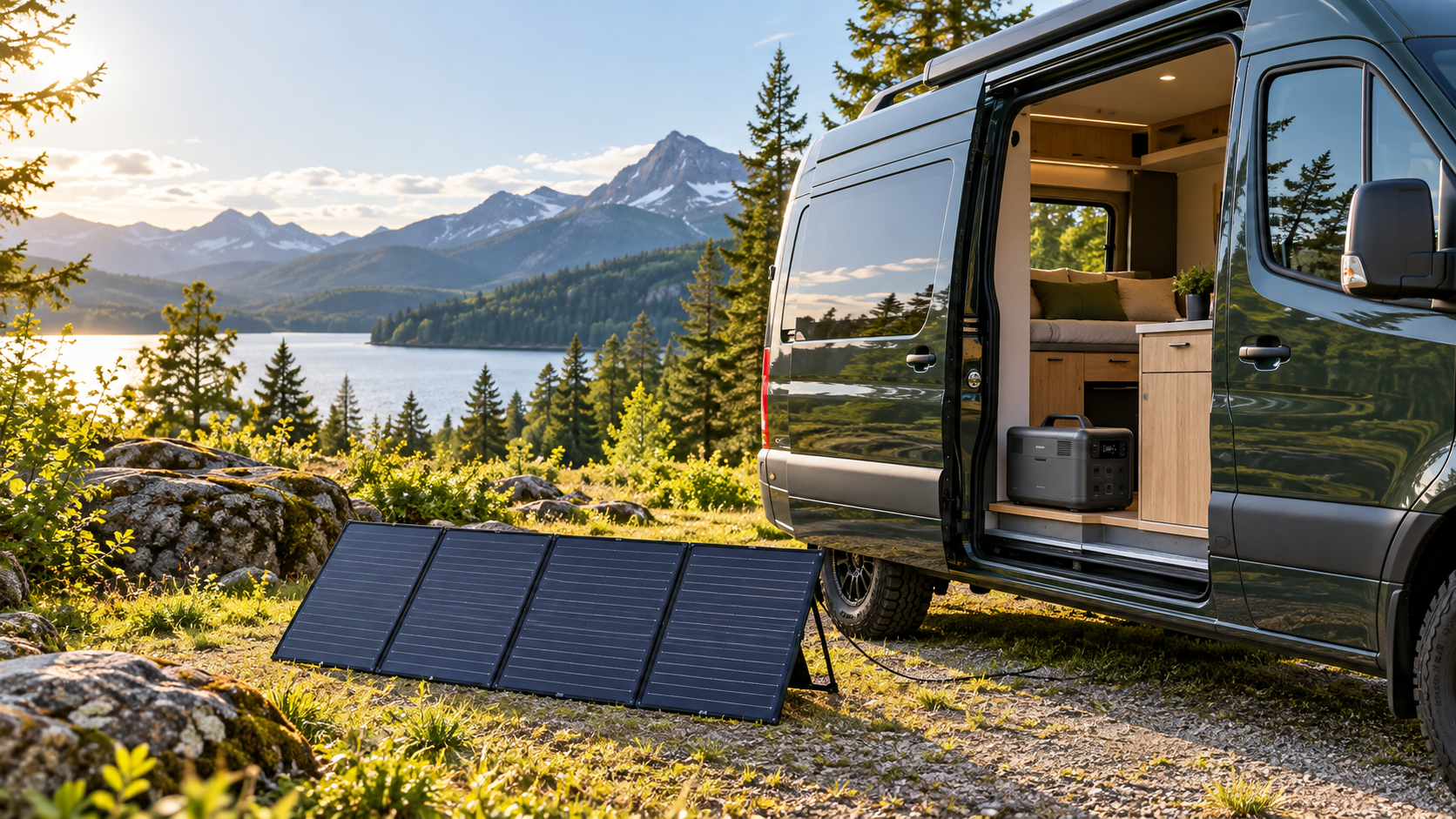
For solar charging, compare a foldable panel's voltage and current with the station's PV input limits, allowing for site conditions and cable length. Also consider shore power or vehicle charging only where the product documentation explicitly supports it. Camp parking, shade, weather and season can materially change the energy available from a portable panel.
Questions buyers ask
Is battery capacity the same as runtime?
No. Runtime depends on the actual load, conversion losses, temperature and how much energy is usable under the product's operating limits.
Will any foldable panel charge any station?
No. Match voltage, current, connector, polarity and any required adapter using the exact product documents.
What to send to VIEWPOWER
Share a load worksheet, daily use pattern, target market, preferred charging sources, available panel space and critical appliances. Explore RV and mobile power, portable power stations and the project enquiry form.
Apply this to your project
Share the application, proposed components and target market so the relevant model documents and compatibility points can be reviewed.
Discuss your project ↗