
Flexible or Foldable Solar Panels: Which Fits a Mobile Project?
Choose by mounting surface, deployment pattern and electrical limits
Published · VIEWPOWER. Check product figures against current documents for the exact model.
Short answer: A flexible panel is worth reviewing when weight and a suitable curved mounting surface matter. A foldable panel suits temporary deployment when it must be packed, moved or aimed between uses. The correct choice still depends on electrical matching, mounting instructions and the operating environment.
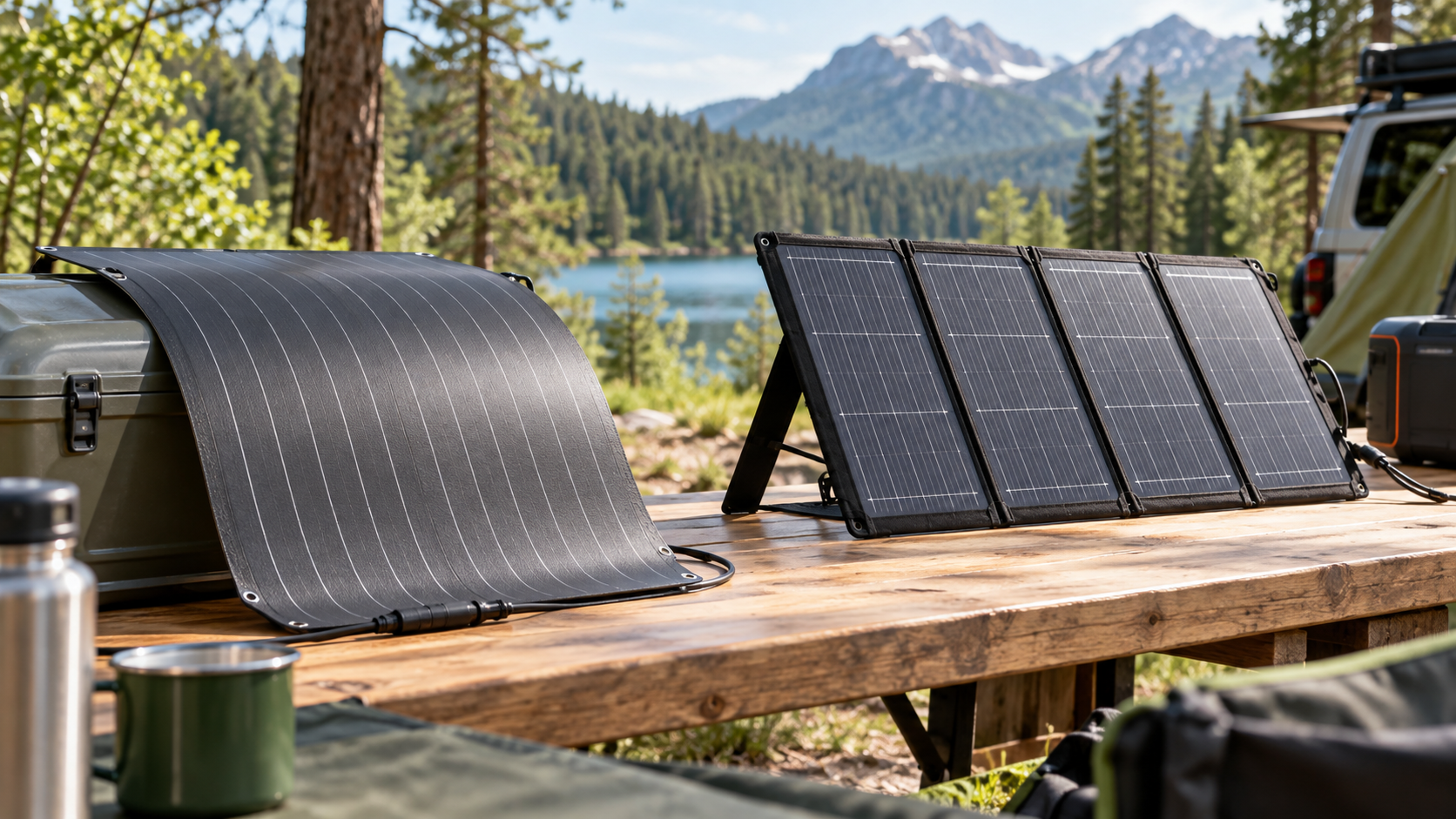
Compare the installation pattern
Flexible modules may fit space-constrained or gently curved surfaces, but bending radius, fastening method, airflow and heat exposure must follow the current product instructions. Foldable panels are designed to be transported and deployed, so handling, kickstand stability, storage size and cable route become important. Neither format should be selected from rated watts alone.
Check electrical and mechanical details
- Compare Voc, Vmp, Isc and Imp with the inverter, hub or station input limits.
- Measure the usable mounting or deployment area and likely shade.
- Confirm connector type, polarity and any approved extension cable.
- Review wind, abrasion, moisture, temperature and storage conditions.
- Request the exact model's installation guidance before fixing a panel to a vehicle or structure.
Use published model information carefully
The VIEWPOWER catalog includes LS-SP120 / LS-SP240 flexible panel references and an LS-SP foldable series. These pages help identify candidate formats; final electrical and installation decisions require the current datasheet for the exact model and project conditions.
Questions buyers ask
Does a flexible panel always work better on an RV roof?
No. Roof shape, airflow, heat, fastening and serviceability can change the answer. Review the mounting instructions and vehicle constraints.
Does a foldable panel need permanent installation?
Its main advantage is temporary deployment, but it still needs stable placement, safe cable routing and suitable weather conditions.
Next step
Send the mounting surface, available area, charging device model, target market and how often the panel will be moved. Compare the solar panel range and request model documents.
Apply this to your project
Share the application, proposed components and target market so the relevant model documents and compatibility points can be reviewed.
Discuss your project ↗