
Balcony Solar System Planning: Direct Use or Battery Storage?
Choose the system path from load timing, space and connection rules
Published · VIEWPOWER. Check product figures against current documents for the exact model.
Short answer: Choose direct generation when electricity use largely overlaps with daylight and a simpler component path meets the project brief. Consider storage when useful loads occur later and the added battery, hub and control interfaces can be justified. Neither choice can be made from panel wattage alone.
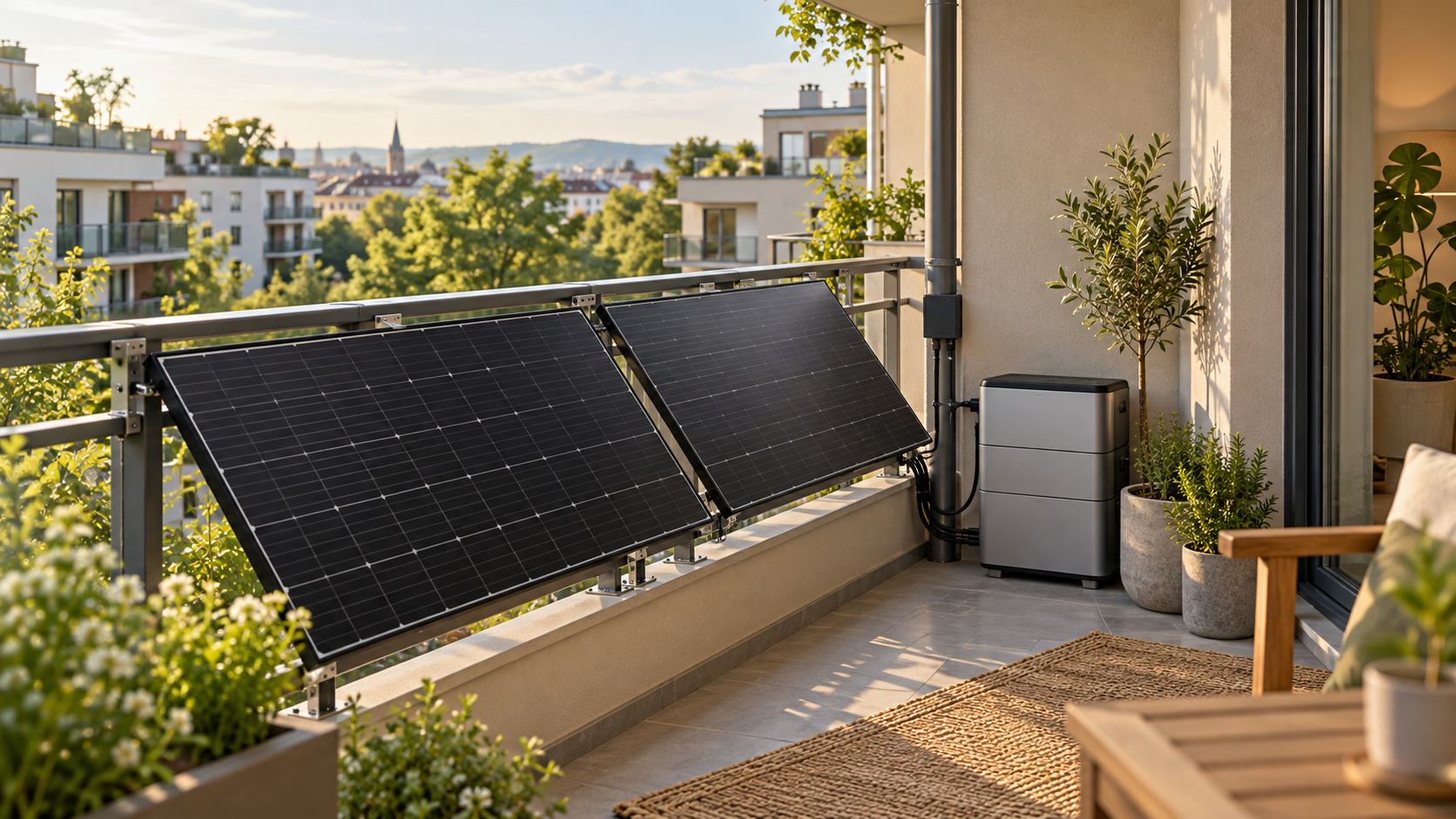
Start with the load schedule
Record which appliances run during the day, their power and their operating hours. A direct-use system sends available PV output through a suitable micro inverter for use at the site, subject to local connection requirements. A storage path adds decisions about battery capacity, charging limits, conversion and control. A battery cannot compensate for poor panel position or insufficient solar resource.
Compare the component paths
For direct generation, review the solar panel, micro inverter, mounting approach, cable route and AC connection. For storage, also review a solar hub or controller, battery, protective functions and the permitted connection topology. The exact interfaces depend on the selected model revisions.
Check the balcony constraints
- Measure usable area and identify shade at different times of day.
- Confirm railing or surface loading, wind exposure and cable routing with the property and installer.
- Check PV voltage and current against each input's limits, including expected cold conditions.
- Review the destination market's grid connection and installation requirements before ordering.
Questions buyers ask
Is a battery required for balcony solar?
No. A direct-generation design can be considered where its use pattern and local rules fit. Storage is an additional design choice, not a default requirement.
Can a panel and inverter be paired because their wattage looks similar?
No. Voltage, current, input count and MPPT operating range must be checked with the current datasheets. Start with our compatibility guidance.
What to send for a configuration review
Share the target market, balcony dimensions, shade pattern, daytime and evening loads, proposed mounting method and desired system path. VIEWPOWER can then discuss relevant balcony system components and the documents needed for a final decision.
Apply this to your project
Share the application, proposed components and target market so the relevant model documents and compatibility points can be reviewed.
Discuss your project ↗